
Feed Thyself: How to Cook Confidently on a Budget Without Kitchen Anxiety

The kitchen can feel loud before anything even starts. The pan is too hot, the recipe has twelve steps, the grocery bill is climbing, and somehow every dinner online looks like it belongs in a magazine.
Auntie Meg’s kitchen begins in a kinder place. Food does not have to be picture perfect to be good. Cooking does not have to feel like a test. And feeding yourself well does not require a giant budget, fancy tools, or a pantry full of ingredients you only use once.
Feed Thyself: Becoming a Confident Homecook is built for anyone who wants to feel steady in the kitchen, especially young adults living on their own for the first time, cautious beginners, and home cooks who freeze up when a recipe says “season to taste.” The goal is simple: learn how food works, use what you have, and make meals that taste good to you.
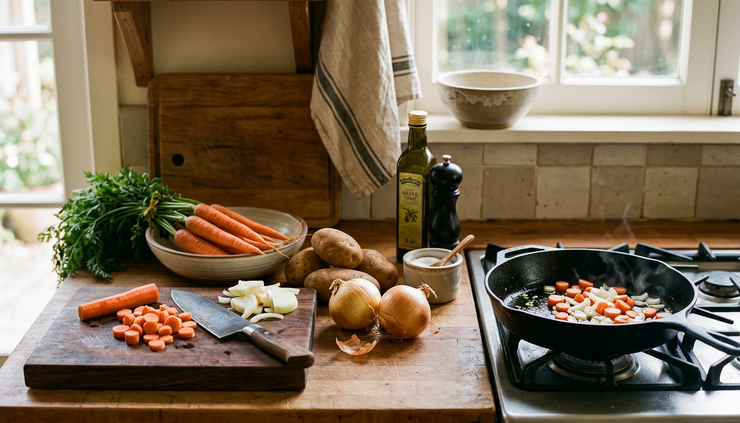
Confidence starts before the stove turns on
Kitchen anxiety often comes from trying to do too much at once. A long recipe asks for chopping, timing, seasoning, measuring, and cleanup, all while something sizzles in a pan. That can make even a simple meal feel stressful.
The way through is not perfection. It is practice with room to breathe.
Start with one skill at a time:
Chop one onion without rushing.
Boil pasta and taste it before draining.
Scramble eggs over medium heat instead of high heat.
Roast vegetables until they smell sweet and look browned.
Season a pot of soup a little at a time.
These small wins matter. They teach your hands, eyes, and nose what food looks like as it cooks. Over time, confidence grows because you stop relying only on instructions. You begin to trust yourself.
That is the heart of Auntie Meg and her book Feed Thyself: Becoming a Confident Homecook. It is less about memorizing recipes and more about learning the patterns behind them. Through frameworks, gentle guidance and a few short stories, cooking at home can become a creative, engaging and gratifying activity.
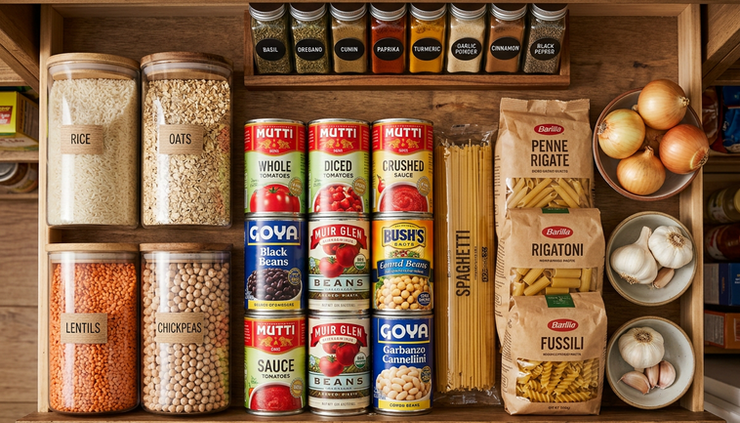
Your pantry is not just storage
A useful pantry is not a collection of expensive jars. It is a set of dependable building blocks. When the cabinet, fridge, and freezer work together, dinner gets easier and grocery shopping gets less frantic.
A basic pantry might include:
Rice, pasta, oats, or tortillas
Canned beans, tomatoes, tuna, or broth
Peanut butter, olive oil, vinegar, and soy sauce
Potatoes, onions, garlic, and carrots
Frozen vegetables and frozen fruit
Eggs, yogurt, cheese, or another protein you use often
A few spices you truly like
The trick is to buy food that can play more than one role. A can of black beans can become tacos, soup, rice bowls, quesadillas, or a quick salad. Eggs can become breakfast, fried rice, a sandwich, or a simple dinner with toast and greens.
A tight grocery budget works best when ingredients have jobs. Auntie Meg's weekly newsletter Practical Provisions puts pantry staples to use. Learn how to use a single ingredient across multiple dishes, minimize waste and feel confident knowing every dollar spent is a used and used well.
Recipes are frameworks, not rules carved in stone
A recipe can teach you, but it does not have to control you. Many familiar dishes are really frameworks.
Take a taco. At its core, it needs a wrap, a filling, something fresh, and something flavorful. That could mean ground beef, lettuce, and salsa. It could also mean black beans, cabbage, yogurt, and hot sauce.
A soup needs liquid, texture, seasoning, and something satisfying. A stir-fry needs quick-cooking pieces, a hot pan, and a sauce. A grain bowl needs a base, toppings, protein, and contrast.
Once you see the shape of a dish, you can make it your own.
Use this simple pattern when you feel stuck:
Pick a base.
Add protein.
Add vegetables.
Add fat or sauce.
Add crunch, acid, heat, or herbs.
A rice bowl with chicken, broccoli, mayo, soy sauce, and sesame seeds is dinner. So is a tortilla with eggs, spinach, cheese, and salsa. Neither one needs to win a beauty contest. It only needs to feed you.
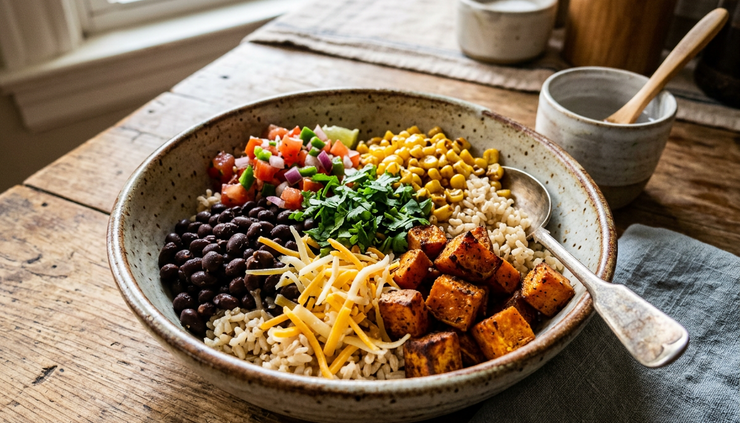
Delicious beats picture perfect
Kitchen anxiety gets worse when every plate feels like it has to be photographed. Real home cooking is messier and better than that. The cheese melts unevenly. The soup splashes. The pancake flips badly. Dinner can still be wonderful.
A confident home cook learns to ask better questions:
Does it need salt?
Would a squeeze of lemon help?
Is the texture too dry?
Would a sauce bring it together?
Did I enjoy eating it?
These questions build skill. They also bring the focus back where it belongs, on nourishment, taste, and pleasure.
Give yourself permission to repeat meals. Let Tuesday’s dinner look like Monday’s leftovers tucked into a tortilla. Keep a short list of “I can always make this” meals. For many people, that list might include pasta with jarred sauce and vegetables, eggs and toast, quesadillas, rice bowls, tuna melts, baked potatoes, or soup from pantry staples.
Repetition is not failure. It is how cooks get calm.
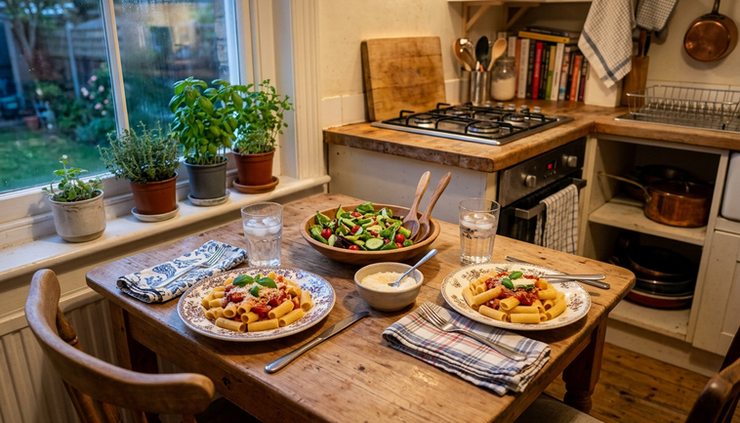
Make the kitchen a place you want to return to
Auntie Meg’s kitchen is not about showing off. It is about helping people feed themselves with less fear and more joy. Start small. Cook one meal you can repeat. Learn what your pantry can do. Shop with a plan, but leave room for real life.
Most of all, make your food. Use recipes when they help. Change them when they do not. Taste as you go. Laugh when something sticks to the pan. And of course, keep a pizza in the freezer, just in case. Because things will wrong, the sauce will split, the rice will burn. Give yourself the grace to hit the easy button occasionally.
Confidence does not arrive all at once. It shows up meal by meal, each time you prove to yourself that you can walk into the kitchen, use what you have, and make something delicious.
For a good starting point; subscribe to Auntie Meg's Practical Provisions newsletter. The menu is fun, the grocery list is simple and the recipes are writtten for the beginner with options for additions and substitutions to fit every taste. It arrives every Thursday in your inbox and every grocery lists aims to keep your grocery bill under $60 for the week.
Comments